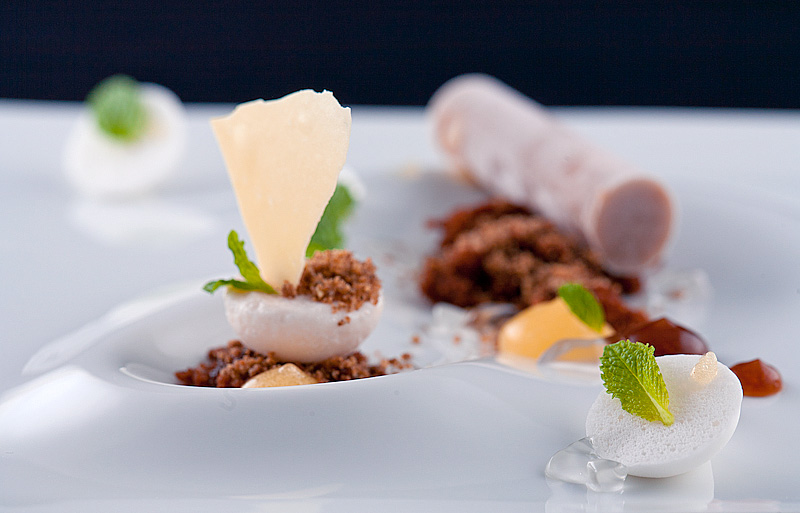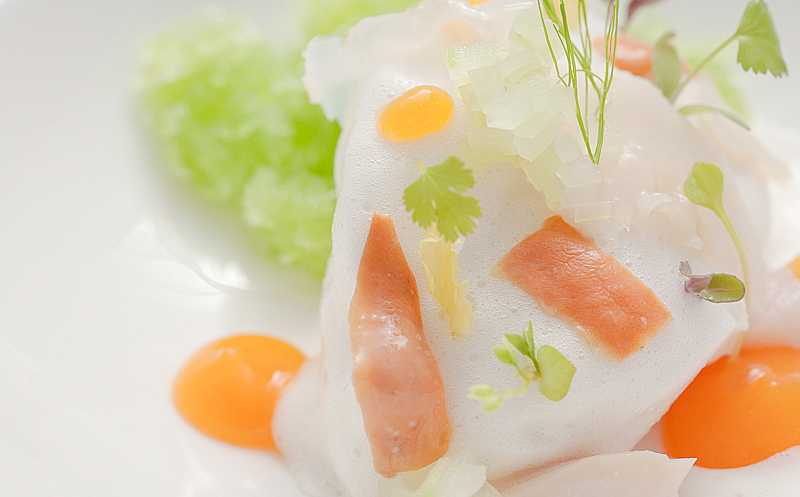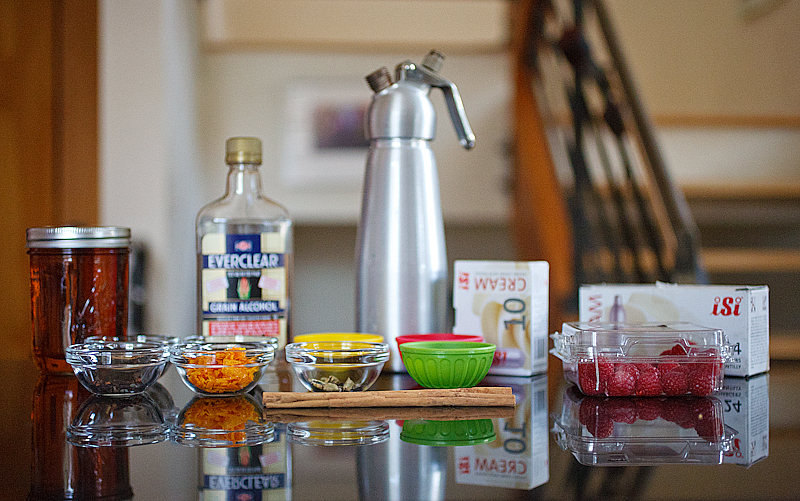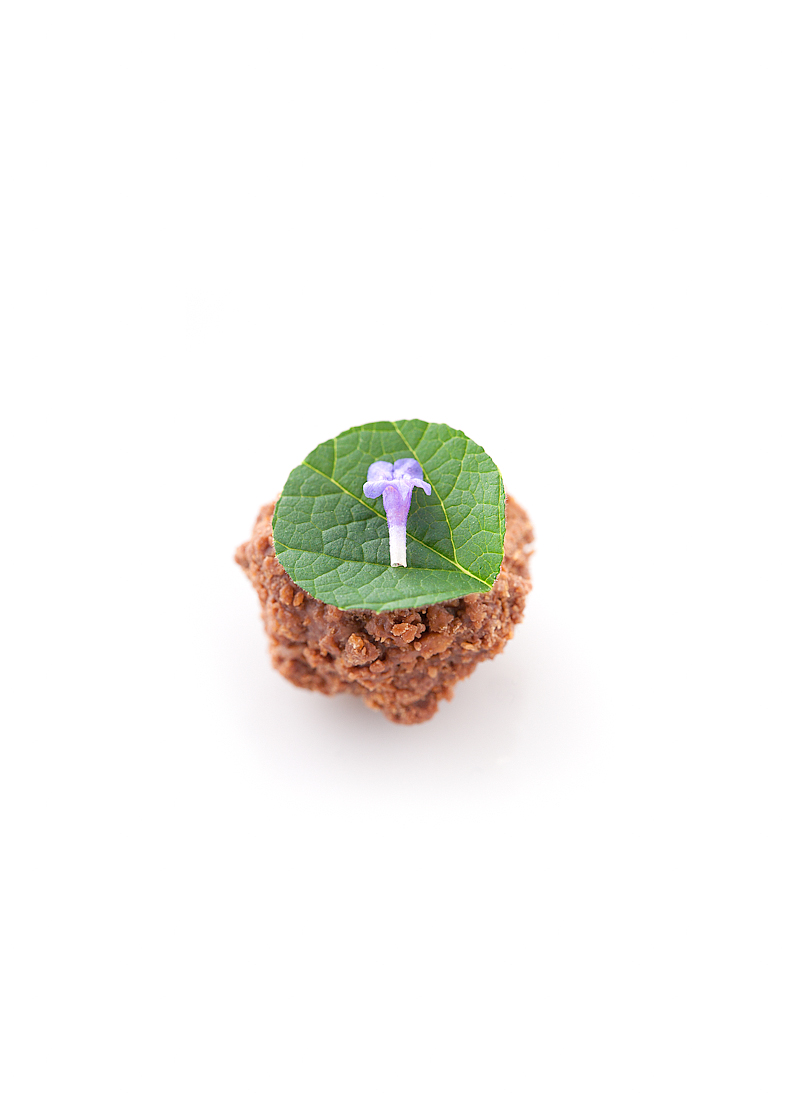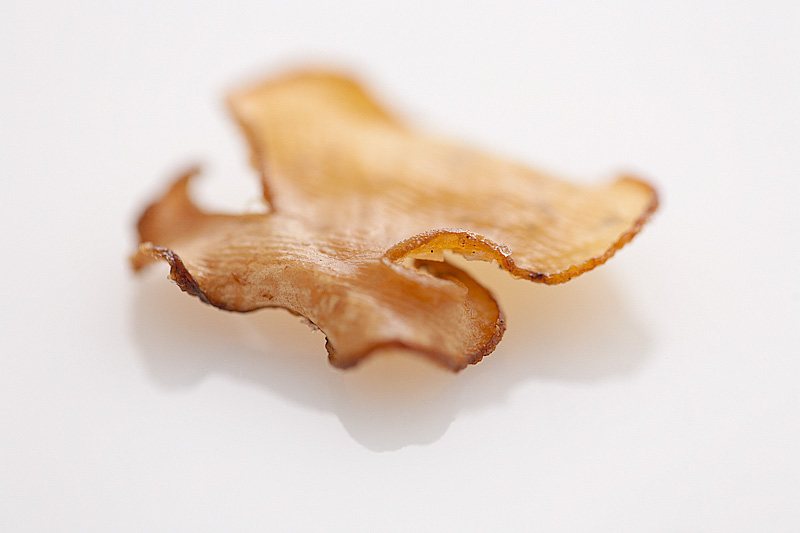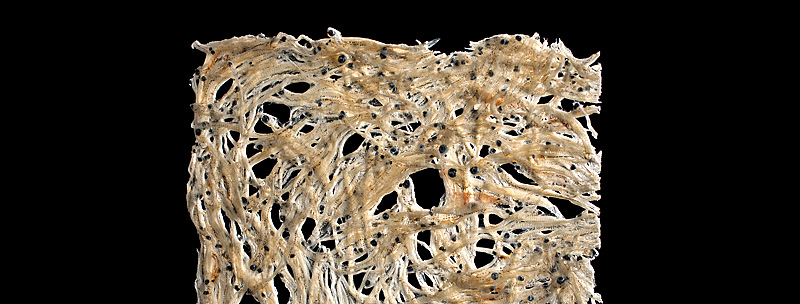
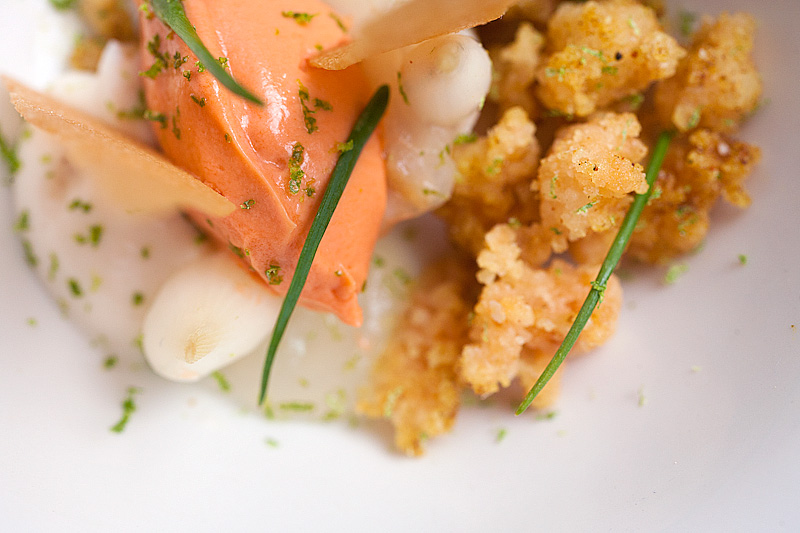
Pine Shoots, Smoked Potato, Many Foraged Garnishes

When I bought the French Laundry cookbook several years back, I came home and sat curled up in an oversized chair and read it straight through from cover to cover. Most of the things it contained were–at the time–not real for me. I had no idea what most ingredients were, how to pronounce the techniques Chef Keller mentions, or what any of the oddly-named dishes might taste like. Mine was largely a very blank, hollow fascination that this was something important but that I didn’t know enough at the time to understand why. There was one part of the book though that struck a very powerful chord with me: Chef Keller describes a rabbit purveyor that visits him one day and leaves him an order of live rabbits. Chef questioned the purveyor about this, and was told he basically would be required to do the butchering of the rabbits himself. He gently regales a fairly horrifying tale of trying to slaughter a struggling bunny, badly-injuring (but not killing) it, which then escapes from his grasp and starts running around the back yard area wounded and terrified. When the Chef finally chases down and dispatches the rabbit, a thick gravity settles on him: he realizes that the only way he can possibly attempt to rebalance things is by using as much sensitivity and skill in preparing the rabbit dish he originally wanted to try as he possibly could.

I still love this story; its lesson is woven into the things I find poetic about Noma and much of Alinea’s work, and it’s fun for me to look for opportunities to think like this.

A few weeks ago while at work, I took a break to walk around outside a bit. A small grove of pine trees caught my eye; the tips of all the branches were droopy and limp, making them look like something out of a Dr. Seuss storybook. I walked over to get a closer look and found the branches were sagging because they were laden with heaps of small, plump ‘baby pine needles’. When they’re in this stage, the needles are soft as a paintbrush. Several months ago I saw Ferran Adria using pine needles similar to this in “Cooking, In Progress“. I picked a few of these soft needles and tasted them; they were tart and citrusy and gently pine-y, with a very chalky, tannic aftertaste.

I immediately wanted to try making something with them. In trying to think up complimentary flavors, another thought hit me: what other ingredients could I find around work?

We’re fortunate to have a culinary team as part of our staff at work; these chefs manage a lovely cafeteria that feeds upwards of 1000 people each day for lunch. The team is led by Chef Jennifer; she and the team dedicate untold amounts of care and consideration to the food presented in our kitchens. She once mentioned her belief that it’s important to be surrounded by the values, awareness, and sensitivity that yield good food.

To that end, we have several expressions of this scattered throughout our campus, so I started roaming around to see what I could find. Our rosebushes weren’t in yet, so there weren’t any rose petals with which to play. I found several just-ripe lemons on a small tree near the entry to one of our buildings, along with lots of other herbs (mint, rosemary, some thyme). There are artichokes, but those won’t be blossoming for a while. Then I remembered Chef pointing out to me a small landscaped area between two of our buildings that are actually gardens. These gardens aren’t very big, and I’m curious how many people have noticed them as anything more than decorative, but they’re nevertheless quite beautiful and very carefully maintained. They’re not large enough to fully-support the kitchens for the entire company, though I believe the chefs do make use of them when they can.

When I walked over to our main garden area, I ran into the gardener responsible for tending the plot. She excitedly pointed out what all she had planted, giving me a little tour of the planters. There were fava beans and peas that were starting to come in (she’d harvested what she could just before I got there), dozens of varieties of leafy greens and herbs, and several varieties of edible flowers. Staggered near the center of both planters are healthy blueberry bushes that were laden with unripe blueberries, and near the end of one of the planters is a smattering of root vegetables that includes beets, radish, potatoes, and carrots.

You guys, it’s pretty awesome.

I spent the next several days taking breaks and revisiting the gardens, making lists of everything I found. At first, I didn’t note what was actually in season;I just wrote down everything that was edible on our campus. I started sketching out ideas for some dishes that featured various combinations what I’d found. One idea that jumped into my head quickly was to build something around the blueberry bushes; I had this idea of a tidy little cube of deep indigo blueberry sorbet, anchored on some kind of streusel, paired with a pine shoot and topped with tarragon leaves. I could garnish the cube with candied lemon zest powder, and dot little globules of carrot puree around the assembly. In my head, the vibrant colors of deep indigo, orange, bright green, and vibrant yellow looked cool, and I felt the flavors would work well together and be pleasantly surprising.


When I showed the sketch to Sarah though, she pointed out “Yeah, but the blueberries aren’t ripe yet, you said. Would you just use unripe blueberries?”

“Oh no, I’d just buy some blueberries at the grocery store, and say that this was inspired by what I found in our garden.”

She pursed her lips skeptically. “That’s cheating! I think it’s more interesting if you literally use what you find in the garden.”

Dammit. She was right. That would make things notably harder for sure, but also kinda fun in a Top Chef-y sort of way.

I went back to the garden and made more lists, noting this time what was ready to be harvested. Sometimes when I get an idea stuck in my head it takes a bit of effort for me to boot it out and move on to the next; I kept seeing that nice blue cube of berry and it looked so pretty in my mind’s eye, and in cycling through the available bounty from the garden I kept trying to figure out how I could shuffle something else into the position of the blueberry cube.

I was walking from the parking lot into work a few mornings later, the cold breeze brushing against my cheeks, and noticed I could smell the kitchen already awake and bustling. Specifically there was the warm, toasted smell of the woodfire oven drifting through the air. Walking into the atrium bolstered the scent, and I thought “Huh, maybe it could be cool to try to include a nod to the kitchen itself into this dish. I could include a smoky element to one of the components…”. I started flipping through my list again; I thought I remembered the gardener mentioning that there were beets in one end of the garden. Maybe I could replace the blueberry sorbet with a smoked beet sorbet? Beets pair well with lemon and carrots, and the various herbs I’d found could be used to garnish it. A sweet smoked beet sorbet sounded like a pretty crazy idea to try, and it would probably create the surprise/emotional element I needed.

The following rainy Saturday, Sarah and I came in early in the morning to do a bit of harvesting. She was armed with her camera and I with some gardening gloves and shears. The first thing I wanted to do was find the beets; they would be the main component of the dish, so were the most important for me to confirm. I rooted around a bit in a bunch of greens that looked like beetroot greens, but failed to find any beets. A little confused, I pulled out my phone and did some searching to try to identify the green leaves with red veins running through them that I’d thought were beets. They turned out to be swiss chard.

Hm.

I stood in the rain for a few minutes, trying to rethink things. Sarah asked why I couldn’t just try building a very pretty, simple salad from the abundance of leafy greens and edible flowers that were clearly ready. While I certainly could have done that, it seemed a little too easy. I started going through the garden again, trying to find something that was substantial enough of a base that it could support all the garnishes I wanted to include. The one thing I hadn’t considered up to this point was a batch of potatoes, their greens nearly-overshadowing one end of the garden.

“Do potatoes go with lemon? Can I do something interesting with potatoes?” It was hard for me to boot the ‘surprising sorbet with garnishes’ idea out of my head, and potatoes seemed boring by comparison.

“Seriously? You ever had Greek food? They pair potatoes and lemon all the time.”

Again, she was right. But it was cold, we were both shivering in the rain, and I wanted to just go home and be warm and eat some soup or something. Something like…a…hot…potato soup?

I started digging, and up came a few golf-ball sized yukon gold potatoes. Awesome. I looked around for what else I could use; the insistence on doing a sweet dish gave way in the moment to something warming and savory. Nasturtium leaves have a nice peppery taste; maybe rather than pepper in my potato soup I could incorporate the nasturtium. I grabbed some flowers from the plant too, along with bunches of arugula flowers, mustard greens and flowers, cilantro, and carrots. I also picked a few handfuls of rosemary, chervil, and tarragon, then headed up to the terrace to grab some lemons. Dripping and cold, I headed home to try to figure out how to put this all together.

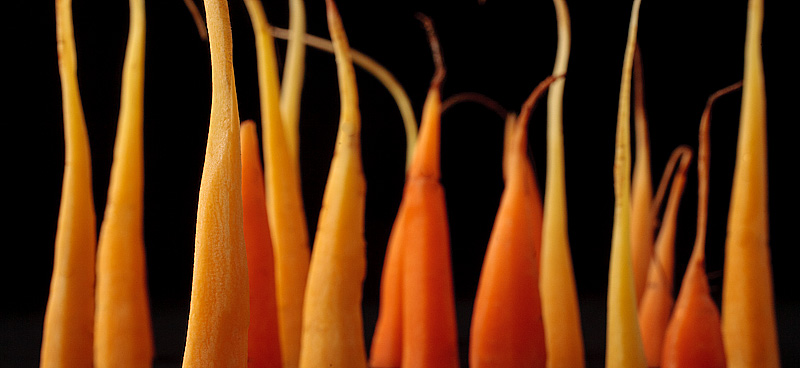
I knew up front I wanted to make a carrot puree similar to what I made for the Hazelnut dish recently; I made this by slicing the carrots on a mandoline and cooking them sous vide with some carrot juice and maple syrup. I was a little weirded-out to find the centers of all the carrots were green; I worried I might have picked them prematurely, but some internetting suggested this is actually a sign of organic, natural produce; carrots with orange centers apparently have been genetically-modified to have this trait.

I pureed the cooked carrots and stored the puree in a squeeze bottle in the fridge while I moved on to making a lemon pudding. This involved steeping some lemon zest and saffron with some sugar for 20 minutes or so, then blending this with some set agar to a pudding consistency. I hit the saffron a bit hard, which helped give a nice yellow color to the pudding and also tasted awesome.


I blanched and dehydrated chervil leaves, tarragon leaves, and rosemary leaves for several hours until they were very dry and crisp. While that was happening, I blended some sour cream with the nasturtium leaves and some xanthan gum, which thickens the mixture without distracting from the flavor. Sour cream and pepper are pretty natural buddies with potatoes, and the resulting cream was earthy and peppery and slightly ‘green’ in taste. When the herbs were complete, I crushed them into fine powders using a mortar and pestle.

I started work with the potatoes by smoking some whipping cream and some butter with alder wood chips. For funsies, I also smoked a couple of oranges, the peel of which I would later use in a delicious Old Fashioned. I cut up my potatoes and cooked them in the cream and butter, then pureed the mixture and added gelatin; this cooled into a smoked potato gel.

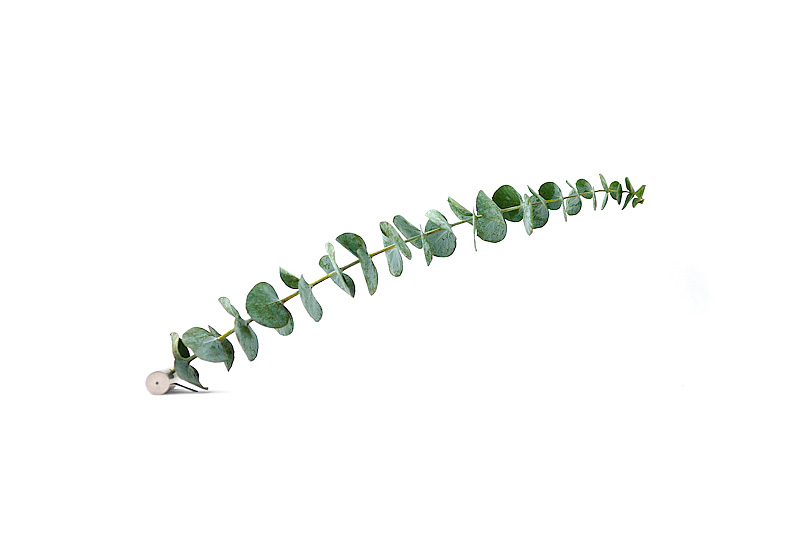
While the potato gel was setting, I picked a few of the most tender pine boughs, picked off all the needles except the endmost ones, and very, very quickly blanched the tips. This fast blanching killed the tannic quality and left me with bright needles that taste of citrus and pine. I cut the set potato gel into cubes and speared them onto the pine sprigs, dipped them in tempura batter, and deep-fried them in canola oil for a minute or so. This caused the potato gel to melt into a hot smoked potato soup.

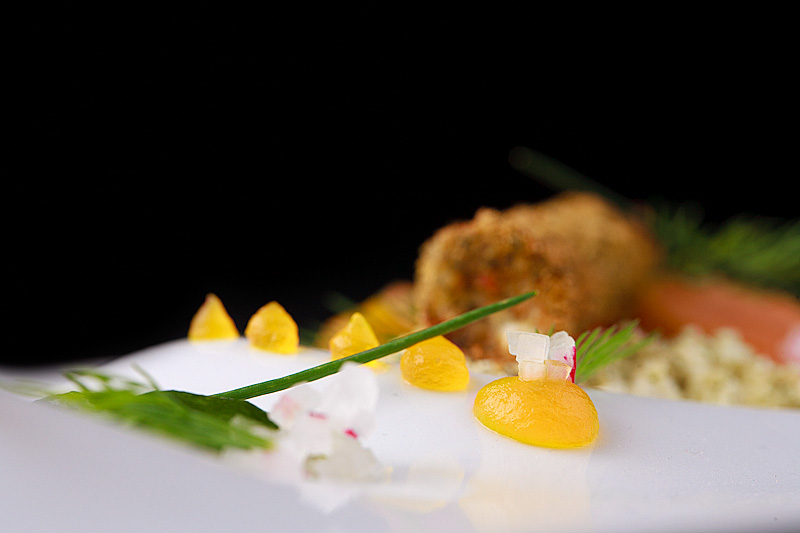
The deep-fried smoked potato soup cubes were plated on some small pools of nasturtium sour cream; some dots of carrot puree topped with cilantro leaves are nearby, as are small dots of lemon-saffron pudding. There are small piles of chervil, tarragon, and rosemary powder garnishing the plate, along with nasturtium petals, mustard leaves and flowers, cilantro flowers, and arugula blossoms. This was the first time I’ve made something up on my own and given a plate to Sarah to taste and evoked a reaction of “Damn, dude.” It turned out really well! The warm, comforting elements went nicely with the blast of cold, rainy weather inherent to spring in the Bay Area, but the fresh crispness of the garnishes contrasted well with them, sort of like stippled rays of sunlight peeking through clouds. I feel good about it representing a specific time and place, and hope it serves to express the reverence and sensitivity with which I regard both.

Some people get tattoos, I guess I try to make a plate of food.

I was excited enough about the final composition that I wanted to try something a little special with the photography of it. I got out my Mamiya and loaded with with some Ektar 100. Shooting with strobes has proven tricky for me in the past, given how I’m used to immediately-seeing what my lights are doing and adjusting accordingly with digital. With the Mamiya, you’ve got about 10 chances to get it right, none of which you can see until the film gets developed. I balanced my digital camera’s settings to that of the Mamiya and tried to balance the lights that way, then shot through a roll of film with the Mamiya. When the negatives were developed, I was actually surprised at how non-terrible the images were:

Some were a bit over-exposed, and one was poorly-composed, but overall things looked reasonable and the extended dynamic range and color of the film was lovely. The default low-res scans made it tough to see how well I’d done at pulling focus, so I went back and requested medium-res scans (which yield jpgs roughly-equal to the size made by an entry-level DSLR…which is to say “pretty great”). Scanning through these, I picked a few I liked, and took these back to have scanned at Fully-Awesome Super-Duper High-Res. This process costs $45 a pop at PhotoLab in Berkeley. I wanted to do this a) because I think it could be cool to try making a poster-size print of this, and 2) because I just want to see how mind-blowing a scan at that resolution really is. I haven’t gotten these scans back yet, but I’ll report back when I do.

One other aspect of this that I find increasingly-interesting is the video storytelling side of things. Sarah and I recently saw a really beautiful documentary, Jiro Dreams of Sushi, and wanted to try to incorporate elements and attitudes from it into a video. Part of what makes documentaries so interesting to me is that you can’t really know what the story is until you get all the footage back into the editing room. So it went with this dish; we knew we wanted to try to capture the beauty and serenity of foraging for ingredients, and make clear the very natural origins of everything that ended up on the plate at the end. I tend to want to shy from purely instructional videos, but beyond that there are lots of questions that arise each time we shoot stuff. Are we telling the story of the making of this dish? Are we conveying a theme or trying to capture a particular aspect of this? We cut and re-cut the video for this one several times, and each time the ‘story’ of the video was about something different. I like where we ended up, but with film, just like with cooking, things are never really ‘done’. It’s always just “here’s a version that’s pretty ok”.

Beef, Elements Of Root Beer

What’s in root beer?

There are hundreds of root beer brands in the United States, and there is no standardized recipe. The primary ingredient, artificial sassafras flavoring, is complemented with other flavors, including vanilla, sarsaparilla, licorice root, anise, molasses, fennel, star anise, hops, fenugreek, allspice, nutmeg, clove, cinnamon, and ginger.

Not depicted in the video was how I started this dish, which was by making a huge batch of veal stock. Alinea’s version of veal stock is similar to that explained in The French Laundry cookbook, albeit a bit more streamlined. The basic idea is to gently simmer veal bones and some vegetables for two sessions of 8 hours each, combining the results of the two sessions, and reducing the lot to a thick, unctuous, delicious stock. This in practice takes 3 solid days’ work, especially when agitated by my insistence on doubling the recipe so that I’d have an ample surplus of the stock to last me through several upcoming dishes that require it. Just accepting the recipe’s face-value instructions to cook some bones, vegetables, and tomato paste for 8 hours fails to include the nearly two hours it takes to prepare the ingredients and bring a giant pot of water up to temperature. Indeed, the final ‘step’ is “reduce until the stock thickens”, with no mention of the full day this takes. There’s no fire-and-forget on this either; you need to be skimming the entire time the stock simmers. It is an act of extreme care, focus, sensitivity, and zen…not unlike sanding a large piece or furniture. I really, really enjoyed it. In the end it yielded me about a dozen small 250g containers of stock, which I’m keeping in my freezer until they’re called for.

Stock made, I started in on the dish proper by mixing a powdery Root Beer Cure. This contained ground sassafras, peppercorns, fennel seeds, juniper berries, star anise, vanilla, salt, and sugar. The ground sassafras might be the most exotic ingredient of the bunch; sassafras is difficult to come by (hint: look for it in holistic/medicinal herb-type stores) and is never used in modern-day root beer because of its content of safrole, which was found to be weakly-carcinogenic in rats and therefore condemned by the FDA–though the more-likely reason The Man dislikes it is because it’s a key ingredient used in the manufacture of MDMA. In reality, safrole is generally no more dangerous to humans than breathing indoor air or drinking municipal water, and the amount of safrole to be found in sassafras bark (which is what I was working with) generally has too low a yield and too high a retrieval effort to be seriously considered for anything other than perfumery applications or–if you’re a dude working your way through a pretty crazy cookbook–culinary use.


In shopping for these spices for the uncountable-th time, I became disgusted with the ridiculous prices for them in small quantities in most grocery shops, and decided to bite the bullet and order larger amounts from The Spice House, so happy have I been with previous stuff purchased from those guys. A few days after I placed my order, a handful of large bags containing very fresh and vibrant spices showed up ready for use. Two thumbs up for going this route if you rip through spices at a slightly-above-average rate.


Juniper berries


Star Anise


This is the sassafras bark I used; it smells overwhelmingly ‘root-beer-y’, but also has a much greater depth and complexity than does a sip of A&W. There’s a minty element to it, not dissimilar from eucalyptus, in addition to the earthier and more-familiar undertones of root beer it carries.


Tahitian Vanilla Bean


Black Peppercorns


Fennel Seeds

A tricky part to this dish is that most components need to be held warm after they’ve been made; the vanilla potato foam, root beer sauce, and glazed fennel all lose their vitality after a short amount of time and if they drift too far from the ‘warm water bath/oven draft’ temperature range, so once the long steps of making the stock and curing the beef short ribs were complete, it was a long day of cooking to complete everything else, working to synchronize completion times as much as possible.

Some might notice my heeding of the great advice offered in the comment sections of previous meat-related posts to try upping my sous-vide-meat-appreciation game by pre-searing the meat before bagging it; a trick that worked delightfully and yielded braised beef that was meltingly-tender and amazingly flavorful. This tip plus some other experience-derived common-sense steps to try to maximize the awesomeness of the whole dish all worked in my favor, and the final plating was one I feel very happy with. Sarah–who’s relationship with meat is waning daily and who is hairs away from being full-on vegetarian–surprised me by asserting how much she genuinely enjoyed it.

The extremely-beefy root beer-cured braised beef cubes are warm and very savory, but their manliness is tempered by the soft, airy aromatic sweetness of the vanilla potato foam. The caramelized salsify seems almost to be a play on french fries always served with a burger and root beer (Chef Achatz mentions his original inspiration for this dish came while eating at an A&W in Michigan); they’re slightly crisp on the outside but yield to soft buttery warmth inside. Garnishes of warm prune and fresh fennel fronds are lovely accents, the sweetness of the prune further balancing the weight of the beef. Favoritest Component Award for both Sarah and I goes, however, to the glazed fennel. Sarah strongly dislikes fennel (she dislikes the anethole-fueled, black licorice aspect of it), but when it’s glazed in butter its other subtle flavors come forward to be more assertively sweet.

Perhaps-anticlimactically, I didn’t get an overall impression of root beer though. Everything tasted delicious, but if I didn’t know I was meant to be looking for flavors of root beer, I’m not sure I would have found them. Even the root beer sauce that glazes the beef cubes, nearly half of which is made of the veal stock, is more ‘veal stocky’ than ‘root beery’ for me. It’s possible I over-reduced my veal stock, perhaps, and it’s uber-concentrated flavor is just too loud for the fennel and sassafras notes–that I know are in there–to be heard.

Pepperoni Pizza

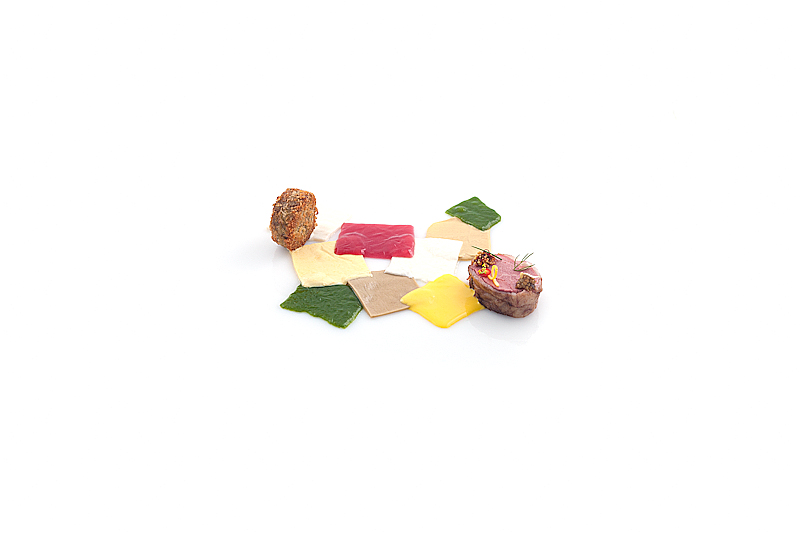
“Almost everyone has had pepperoni pizza and can remember exactly what it tastes like. While there may be variables that come with pizza’s numerous toppings, the core flavors of tomato, cheese, and garlic are nearly universal. The pepperoni merely adds a paprika and fennel seed element to the mix. We all became very excited by the prospect of turning this edible paper into a culinary joke, and Carrier sent one of the externs to the grocery store to buy some mozzarella. I began mixing powders of garlic, tomato, smoked paprika, and fennel pollen together in a ratio that tasted about right. When the extern came with the cheese I grated it into a large saute pan and fired it in a hot oven. I wanted the cheese to caramelize the way it does on the edges of the crust of a pizza that has been overladen with cheese. Once it was browned we hung the pan and collected the rendered cheese fat in a small cup. The fat was then placed in the fridge, where it set up into a butterlike consistency.”

–Chef Grant Achatz, Life, On The Line

Survey says: too cool not to try.

The “pepperoni pizza” joke is one I’d read about before; there’s even a snippet (and photo) of it in the Alinea cookbook. It hails from Chef Achatz’ days as the head chef of Trio in Evanston. As I’ve learned bits and bobs throughout the course of this project I’ve taken little guesses as to how one might make it, but last year when I read his autobiography I was stunned (and excited) that the recipe is more or less laid bare. Given my frustration with myself at tending to follow recipes verbatim first and taste things second, I really liked the obvious lack of precision that went into making something that looks so precise. “Just do stuff until it tastes good” is pretty fun.

I started with a 1-lb chunk of full-fat mozzarella. I grated this onto a sheet tray and baked it in the oven until much of the fat had rendered off the cheese and it had turned brown and bubbly and pizza-like. Draining the fat off of this is a little tricky; the cheese itself isn’t very permeable, so the oils get trapped in the cheese-bubble pockets and congeal before they have a chance to run off. I found I got a better yield by just cooking shredded mozzarella in a saute pan on a burner, periodically pouring off the oil. After a few hours in the fridge this oil set up exactly as he describes: butterlike and firm, and smelling sort of toasty and nutty.

For the dried ingredients, I turned to the Spice House; these guys have a pretty huge collection of stuff and their prices are much nicer than what I typically find in markets around here. Tomato powder, despite not being readily-found in supermarkets, is a fairly common staple. It finds use in things like emergency ration packs and disaster preparedness kits, and also serves as a base in many of the pre-mixed spice rubs one can find for meats and poultry. It has a confectioner’s sugar-like consistency and can cake easily, so I store it in the fridge. It dissolves very quickly on the tongue, and in amounts any larger than a sprinkle forms a thick, sweet tomato paste in the presence of moisture.

The note about pepperoni effectively just being fennel and paprika was surprising to me, largely because it hadn’t ever occurred to me to ask what’s in pepperoni. I flipped through the Charcuterie cookbook to find–sure enough–a recipe for “peperone”, which describes a process of curing ground beef or pork with a mixture of paprika, ground fennel, allspice, and cayenne. I ordered some fennel pollen as Chef Achatz mentioned, which I found has a powerful ‘fennely’ smell but also several other more-subtle notes as well. I’d wondered why I couldn’t just use fennel seed, but when I compared the pollen to some dried fennel seeds I had, there was no contest: the pollen was overwhelmingly aromatic and punchy.

What is fennel?

The bulb, foliage, and seeds of the fennel plant are widely used in many of the culinary traditions of the world. Fennel pollen is the most potent form of fennel, but also the most expensive. Dried fennel seed is an aromatic, anise-flavoured spice, brown or green in colour when fresh, slowly turning a dull grey as the seed ages. For cooking, green seeds are optimal. The leaves are delicately flavoured and similar in shape to those of dill. The bulb is a crisp, hardy vegetable and may be sautéed, stewed, braised, grilled, or eaten raw.

Fennel seeds are sometimes confused with those of anise, which are similar in taste and appearance, though smaller. Fennel is also used as a flavouring in some natural toothpastes.

I ordered “very fine” garlic powder, which has a flourlike consistency. I knew I’d need something that would dissolve quickly and deliver as much flavor as possible. The ‘garlic powder’ one usually finds in grocery stores is actually ‘garlic granules’, with a size closer to that of cornmeal or something; it’s better for use in cooking, when you’re offering the granules heat and time to break down.

From here I started measuring out small amounts of each of the fennel pollen, tomato, and garlic powders, along with some smoked paprika. I also blanched and dehydrated some fresh oregano until it was crisp, and crushed that into a powder in a mortar and pestle. I did the same with some salt and pepper as well.

Then I just started mixing and tasting. The tomato powder is powerfully sweet, so most of the work was trying to balance that.

After I’d gotten something that tasted pretty reasonable, I cut some small squares of “obulato”, or potato starch paper. This stuff has captured the imaginations of both Achatz and Ferran Adria in years past; it’s a thin ‘paper’ made from potato starch that dissolves in the presence of water but not oil or fat. I find it up at the Tokyo Fish Market in Berkeley, where they sell it in small pouch form. It’s meant to hold herbal home remedies (sort of a poor man’s substitute for gelatin capsules). I haven’t found it in any other form yet and it’s tough to find online, though I have seen potato starch flour in Asian groceries around here and am curious how reasonable it would be to just try making some myself.

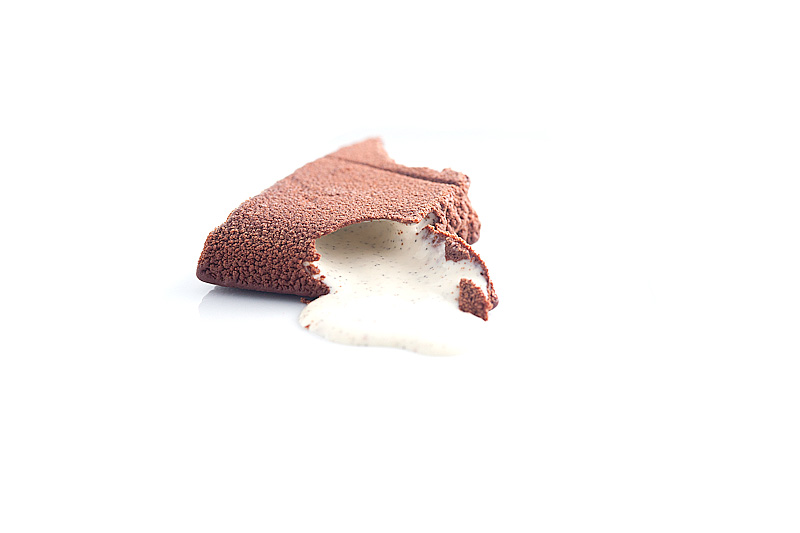
Once I’d cut down some small postage-stamp-size pieces, I smeared the congealed cheese fat onto the paper, then sprinkled my magic pepperoni pizza powder on them.

I took one to Sarah and presented it without comment; she placed it on her tongue, studied it for a few seconds, and then exclaimed “Holy shit dude. That tastes just like pizza.” It did to me as well, or maybe more like rich marinara; I think I could have pushed the fennel a bit more, and maybe actually tried rendering some fat from some pepperoni slices. Missing are the ‘meaty’ notes, the umami you find in pepperoni, but that’s offset by the overwhelming familiarity of the other flavors; really what it’s playing on is a person’s memory of what a pepperoni pizza tastes like, and as such it’s a bit of an oversimplification. At any rate though, it was delicious and fun as hell.

Finally, I often make a modified version of some of these photos that I use as my desktop background. Here’s the one I made this week; if you click on it, it’ll take you to a full-res version of the image that you’re welcome to download if you like.  


Hazelnut, Carrot, Raisin, Melted Butter

Last week, Sarah was away visiting her sister and some friends on the east coast, leaving me with a bit of “Bachelor Time”. Excitingly, “Bachelor Time” very closely resembles “Relationship Time”, except with more meat. I ate hot dogs for most of the week (before I completely lose your respect, I’ll say I was working heavy overtime at work trying to finish some deadlines that were looming). I also got to make some extra-special messes in the kitchen THAT I DID NOT IMMEDIATELY CLEAN!

Sarah being away mostly meant I had to pick something to make from the cookbook that she wasn’t likely to be sad about missing. She’s not the biggest fan of raisins, and the title of this one hearkened images of some sort of raisin loaf in both of our heads, so I pressed forward with it over a few nights while simultaneously texting a drunk Sarah in DC. Not wanting to be left completely out in the cold on that front, I cracked open a few beers myself, and before I knew it this dish had earned the dubious honor of being completed largely under the influence. Milestone?

One of the ingredients needed for this dish is “hazelnut praline”. Some intertubez searching led me to discover this is pretty much just hazelnuts tossed in caramelized sugar. I couldn’t find any prepackaged hazelnut praline at Berkeley Bowl, so I just decided to make some myself. I started with a bag full of raw hazelnuts (or, as some people call them, “filberts”). Problem #1 with these is getting the skins off. Don’t even try to do this while they’re raw, you’ll just end up ever so sad. I…(sigh)…spread my nuts on a sheet tray and toasted them in an oven at 350F for about 20 minutes or so; just until they smelled fragrant. I am so sorry for that sentence.

After letting the toasted hazelnuts cool completely, I could grab a fistful of them and shake them around in my hands to cause the skins to flake off. This is only slightly tedious, and I was left with a nice fragrant bowl of skinless filberts to work with.

I measured out 70g of nuts and melted an equal part sugar in a small saucepan, then poured in the nuts and let the mixture cool. I pulsed the result in a food processor into a fine crumby consistency.

The praline is used in a hazelnut cake, which is made with some eggs, whole wheat and white flours, and brown sugar. This is poured into a sheet tray and baked to a spongy consistency. Then it’s cooled and ripped voraciously into little bits (no seriously).

After laboring on this back-breaking cake, I decided to get my refreshment on for the next step, which involved making a raisin gel. What better way to do this than with a beer made from raisins?! I’m always a sucker for any New Zealand beer I can get my hands on. One of my favorite beers of all time is an IPA by Epic Brewing; it’s floral and grapefruity and awesome.

BUT NOT TODAY! No, today I’d forgo the Epic for another NZ beer I found at Berkeley Bowl, by one of my other favorite breweries down there. Kiwi for raisins is “sultana” (when I first moved there, I was really thrown by the familiarly-packaged “Sultana Bran” I found in the cereal aisle), and this beer seemed a poetic choice while working with this dish.

Of course, I also needed some raisins. The Bowl had packaged bags of just the right amount of something called “Jumbo Prima Raisins”; they’re way bigger than the little Sun-Dried-style raisins I’m used to seeing. They also taste way more genuine and punchy.


I let these steep in hot water overnight to reconstitute them a bit, then blended them with a few magic white powders and poured the resulting liquid into a sheet tray I’d lubricated with some cooking oil. Once they’d set into a gel, I cut them into small flat squares and set them aside.


The ‘magic white powders’ in this case were two types of Gellan gum. Gellan is available in many ‘flavors’; at one end of the spectrum, “Low Acyl” Gellan forms thermoirreversible (unmeltable) gels that are hard and brittle in nature (in the world of gels, this means something that tears easily rather than being very elastic). At the other end of the spectrum, “High Acyl” Gellan forms thermoreversible gel that are soft and elastic. There are lots of blends of these two extremes that try to mix-and-match the best of their characteristics; Kelcogel JJ Gellan is such an example. An advantage of Gellan is that it doesn’t need to reach boiling temperatures to dissolve into a mixture, and in the case of High Acyl Gellan, the melting point is quite a bit higher than that of Agar. The gel I ended up with was soft and slightly toothy, sort of like a very delicate gummi bear.

Despite being in a bit of a raisiny-alcoholic fog (the raisin beer was pretty potent), I pressed on with making some carrot puree. I first juiced several carrots, and sliced several more into thin discs on a mandoline. I packed the discs in a vacuum bag with some honey and the carrot juice, and cooked the lot in a warm water bath until they were very tender. The cooked carrot slices were then blended with some Xanthan gum to thicken the resulting puree into a thick puddingy consistency and put in a little squeeze bottle.


Next I made what the book calls “Hazelnut Nougatine”. When I picture nougat, I think of stuff like Three Musketeers bars; Sarah recently made her own nougat for use in a Candy Bar Pie from the Momofuku Milk cookbook, and it involved cooking sugar to a caramel and folding it into fluffed egg whites (doing this requires a dazzling bit of kitchen timing acrobatics). What I made is what Wikipedia calls “brown nougat (referred to as “mandorlato” in Italy and nougatine in French)” and is basically just more hazelnut mixed with cooked sugar. The result is very crunchy, almost identical to my hazelnut praline, only with a slightly different sugar-to-nut ratio. This was again chopped up into a coarser crumby texture and set aside.

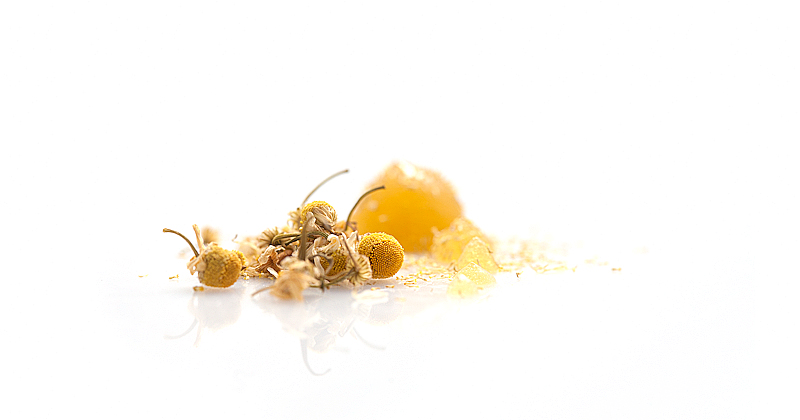
Finally, the big neat surprise: the cool yellow orb, which is spherified melted butter. I’ve done this trick several times; enough to feel like I understand it pretty well and am slightly less-dazzled buy it now. But right when I get comfy, BAM. Something neat and new to learn.

Spherifying butter presents a fundamental problem: butter is fat, fat is oily, oil and water don’t mix. So, how does one get the magic white powder vital to spherification (calcium lactate) dissolved into the butter? A while back I made Beurre Monte for a different dish, which is an amazing sort of mayonaise made just by whipping butter gradually into a tiny amount of water, effectively emulsifying the water into the butter. We use the same strategy here, but we have to do it extremely carefully I learned!

I started by picking a butter. If I’ve learned one thing from my baking experience so far, it’s that not all butters are created alike. “European-style” butters are cultured during the creation process, which results in generation of lactic acid. It gives the butters a nice slight sour note and intensifies the ‘buttery’ flavor. While cooking with cultured butter is a little hit-or-miss in terms of how much flavor you get from it, eating it spread on toast or in otherwise ‘purer’ form highlights the flavor differences nicely. For this, then, I went straight for one of the nicer ones I’m familiar with:

I brought a tiny amount of water mixed with a few grams of calcium lactate to a boil, then whisked in cubes of butter one at a time to form an emulsion. This took me several tries to get right, and it’s important to note (as I learned) that the calcium lactate–the magic ingredient that’s gonna make us up some real nice butter balls–does not dissolve in the butter. We want to basically keep the calcium lactate/water in suspension long enough for the butter to solidify, at which point we’re hoping for as uniform of a dispersal in the butter as possible. If the emulsion breaks even in the slightest, the oil in the butter rises to the top of the molds as the butter sets, which means there’s no water (and therefore no calcium lactate) on that upper surface, which means the sodium alginate bath has nothing to ‘latch onto’ to form a sphere membrane in that area. Tricky.

Once the butter has set, I carefully lowered the half-spheres into a (cold) bath of sodium alginate. I let the butter sit for 20 minutes to allow the calcium lactate and sodium alginate to form a membrane, then I flipped all the half-spheres and waited another 20 minutes. At this point, you can tell if you’ve messed up; you’ll see obvious holes in the membrane if too much oil has settled to one spot.

When I transferred the butter to a water bath to rinse them, I could see a nice membrane had formed over most of them.

Then, the magic: lower the half-spheres into a warm water bath held at 94F–warm enough to melt the butter. Surface tension causes the shape to change to that of a sphere, once the sphere is fully liquefied, I can pull them out and serve them. They look like tiny bright egg yolks; one might mistake them for quail yolks even.


Finally I was ready to plate. I bought a “Dunes” plate from Crucial Detail just before Christmas specifically because of how it works with this dish. There’s a neat sort of ‘lagoon-like’ area of the plate where the butter sphere can do. When a diner breaks the sphere, butter runs like a little river down the plate into a larger lagoon area, where it mixes with the rest of the components for easy swishing and dipping fun.

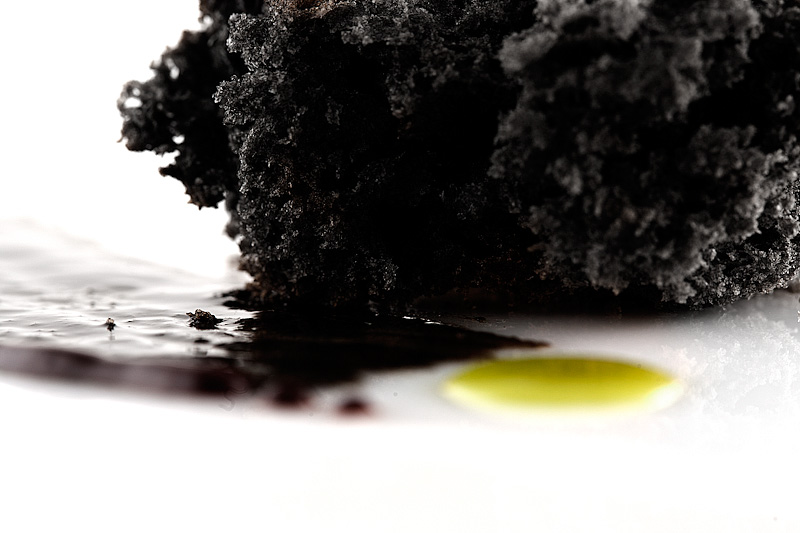
The sphere, some shards of the hazelnut cake, and some squares of raisin gel are heated under a broiler until the cake is slightly-toasted and the whole plate becomes aromatic. It’s then topped with a sprinkle of the crushed nougatine, dots of the carrot puree, and some ground cinnamon. The dish tastes more or less like (a really great version of) what I expected; the flavors are warming and autumnal, and the plate is literally warm and aromatic and yummy. I thought I would find the raisin/carrot-cake-vibe boring but it’s really very delicious. The carrot puree tastes sweet and honeylike, and I like the vibrant color it has to offer. The cake is molassesy and toasty and nutty, which is great in and of itself. But obviously drizzling everything through a river of warm melted butter only makes everything more delicious; you might as well throw a few slabs of bacon on the plate, as predictable as that is.

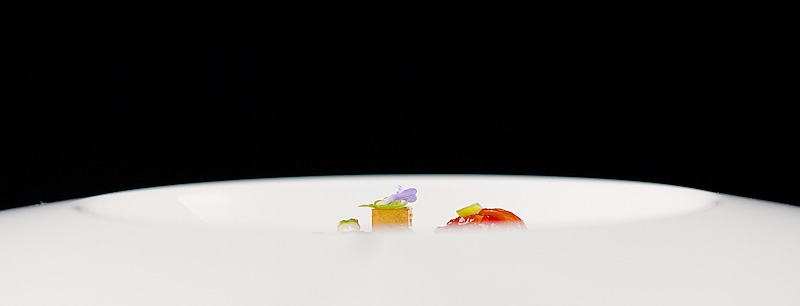
As I was shooting photos of this, I found the lower I got to the plate, the more it started resembling a weird martian landscape. I futzed with my lights a bit to try to allow enough room to close down my aperture and get a nice deep depth of field. I was so close this didn’t work very well, but shooting this dish and the last Bison one both gave me an itch to try to get ‘closer’ to the food, to shoot it as if I were a little guy hanging out in this giant world of food. I’d like to see if I can find ways to pursue that idea, it seems like it could be neat.

Bison, Cranberry, Persimmon, Juniper Branch Aroma


I’m sure I’ve admitted somewhere on here before (probably several times; I have a terrible memory ha HA!) that the original appeal of starting this project was “AWESOME WHITE POWDERS!”. I came at this sort of the same way someone who doesn’t know much about photography asks “What kind of camera do you use?” and assumes it’s the camera that’s doing the bulk of the work. I thought the crazy white powders, when added in just the proper amounts, would somehow mean I was super-terrific at cooking.

When I lived in New Zealand, I had a period where I really tried to explore the arena of selling artistic photography. I participated in an art show and had some stuff hanging in a ‘we sell edgy artsy stuff’-type store in Wellington; in both cases I didn’t do particularly awesomely. I have some theories as to why this was. For some reason photography doesn’t seem to carry with it the same gravity that painting or illustration does; people seem to assume that the camera is doing all the work and a nice photograph is just a matter of being at the right place at the right time. One panorama I painstakingly stitched together of a cool graffiti’d wall garnered lots of interested comments but ultimately never sold, I think largely because everyone thought they could just go take a similar photograph themselves and ‘blow it up’. There also seemed to be an underlying sense that postprocessing in the world of photography was somehow ‘cheating’, or otherwise distanced a piece from the realm of Fine Art (“oh, you just Photoshopped that? Huh.”)

I wonder if this is similar to what makes ‘real chefs’ bristle at the phrase “Molecular Gastronomy”? Not being a chef myself (and coming at this from what I figure is a pretty different angle than Chef Achatz did), I’ve never fully-understood why that phrase is considered to be so distasteful. Why is it bad to say a person is exploring the nuts and bolts of how cookery works? They seem to also not like the phrase “Modernist Cuisine”, which to me sounds maybe less sci-fi but still suggests what’s unarguably true: that this ‘style’ of cooking deserves to have some sort of name. I admit I can only take educated guesses as to why the distaste exists, but I can sympathize with the disagreement that the white powders are doing all the work, as I myself assumed at one point.

I say all this to note that I’m starting to gain an appreciation for nicely-executed dishes that don’t rely on the white powders so much. It’s something that just comes from practice I think, similar to my learned appreciation for my old-school Mamiya medium format film camera. The type of camera a person shoots with or the white powders a chef uses aren’t any more to either of these people than a hammer is to a fine woodworker.

That’s sort of where I ended up with this dish, which for the most part doesn’t involve any white powders (there’s one exception).  It–like the previous Lamb dish– is much more about very considered presentation than being particularly ‘sciency’. Though I still really do love what I get to learn about manipulating various foods, for these dishes I take a little break from that and just focus on the poetry of it.

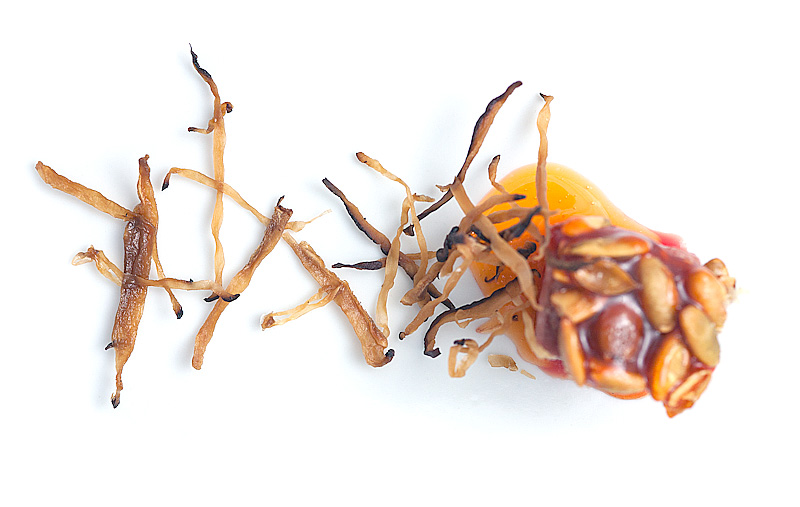
The poetry here involves a very thin sliver of Bison meat wrapped around a warm candied cylinder of Fuyu persimmon. The small bite is topped with tiny dots of cranberry sauce, walnut-cream pudding, crisp puffed pearl barley, and the skin of a fresh juniper berry. The bite is served on a very hot smooth stone, which is–at the table–placed onto a fresh bough of juniper. As the meat sears on the stone, the fragrance of the juniper is released, enveloping the bite in a heady, complex vapor of minty evergreeny awesomeness.

I started by tracking down some Bison at Golden Gate Meats over in the SF Ferry Building. They also had Veal Bones, which I used to make some veal stock for an upcoming dish. The bison had been cut into sirloin steaks, which was fine for what I wanted. I was surprised and a little worried when I realized after I bought it that it was labeled “buffalo”. A quick wikipedia search in situ though told me American Bison (which is often commonly referred to as American Buffalo) are one in the same. THE MORE YOU KNOW

I also bought a cap of beef fat (well, ‘bought’ is a strong word. I asked if they had any and the butcher just chopped me off a hunk from a nearby ribeye and gave it to me. FREE FAT!). I brought this home and rendered it down, then packed the bison in a vacuum bag with the fat and cooked it en sous vide to medium rare.

While that was cooking, I cooked some dried pearl barley in salted water until it was tender (it never got as tender as, say, risotto, despite me cooking it well longer than the recipe specified. I think I did it right though?). I let the barley dry on a few layers of paper towels, then fried it in very hot canola oil. After a few seconds in the oil, it puffs very suddenly and looks sort of like a mini Honey Smack. After draining these I tasted a few; they’re crispy and crunchy with a nice warm nutty flavor.

When I went to buy cranberries for the Cranberry Sauce bit of this, for some reason I kept thinking of–and wanting to try–strawberries. It just seemed like it would taste really nice, with the barley and other flavors, so I made a gametime switchup and bought a big punnet of strawberries. Cooking these down was extremely easy: just “cook the shit out of them”. I did this until almost no moisture remained; the strawberries become almost pastelike in consistency. I blended them and then strained them through a chinois into a perfectly smooth strawberry sauce.

The one white powder used was Agar, and that was to help make a ‘walnut pudding’. This is made from toasting some walnuts and soaking them in milk overnight, then blending the mixture with some agar, letting it set, and shearing it to a puddinglike consistency.

I forgot to take photos of my persimmons, but these were cut equatorially into round slices, which were then simmered in a mixture of sugar and water until they were tender but not falling apart. I cut small cylindrical plugs from the slices using a round cutter, and held these at room temperature until everything else was ready to go.

The last step was finding a few bushy, fragrant juniper boughs. I’m always a little thrown by being tasked with finding ingredients like this; clearly you can’t bang down to the grocery store and pick this up in the produce section. Our neighborhood, though, tends to be amazingly bountiful in this regard. I can remember first moving to the bay area and being put off by the ridiculous variety of plant life I saw everywhere…it looked like a weird mishmash of stuff with no real rhyme or reason, and I missed the homogeneity of, say, the oak woods behind our house in Kentucky, where there might be one odd walnut tree if you were lucky. But this project has given me a wild appreciation for botany, and I find I’m usually scanning streetsides trying to see how many plants I recognize. 3 years ago I wouldn’t have noticed or cared about the nasturtium, lavender, or various sages that grow on the curb in front of our apartment.

Sarah was walking around our area a few days before I made this, and I’d asked her to keep here eyes open for juniper trees. When I got home that night, she mentioned she’d seen several just a few blocks up from us. So the day I meant to complete this, I stepped out for a few minutes with some garden shears and a paper bag and scouted down some promising branches. When asking around at work what I should look for if I wanted to find a juniper tree, one coworker said “It’s easy. They smell like gin and have little berries on them.” He was totally right, though they don’t smell only of gin. The trees I found smelled of gin and a minty, piney, evergreeny sort of smell. Many of the boughs on one tree had little green berries on them; when I looked around a bit more, I saw other branches laden with deep purple berries just starting to ripen. The berries themselves are powerfully-scented; in previous dishes that have called for fresh juniper skins, I’ve always just used dried berries, thinking finding fresh berries would just be impossible. But having smooshed a few of the fresh berries on these branches (and used the skins in this dish), I can say there’s really no comparison. Dried berries have a bit of a one-note flavor, whereas the fresh ones are explosive with fresh wintery evergreen notes in addition to the gin-line taste I was familiar with.

To assemble everything, I sliced the bison meat into thin strips and wrapped them around the persimmon plugs. I trimmed the ends so the assembly would be tidy, and seared the bottom ‘seam’ to get some char on the bison and help hold it in place. At the same time, I heated our oven to 500F and placed some small stones we found on a beach in New Zealand on the rack to let them heat up. I topped the bison bite with dots of the strawberry sauce, walnut puree, a few puffed barley grains, and the skin of a fresh juniper berry. This was placed on one of the hot rocks, which I then transferred to the juniper bough.

Within a few seconds, the searing meat and the evergreen vapor hung thick in our kitchen. It smelled…like standing in our yard during winter. Like cold and comfort at the same time. The branch is more ‘evergreen’ than ‘gin’ when heated like this. The bite itself was good; the meat still lacked a bit of the punch that I expected (and mentioned in the last post), so I plated another for myself and added a few small flakes of salt and pepper. On glancing at the photo in the book more closely, I see they do this exact thing (despite not mentioning it in the recipe. I get this; some steps are so fundamental that it’s hard to remember the need to articulate them, but on the flipside it’s also easy to overlook them when they’re omitted). This brought things to life quickly; the nutty flavor of the barley and walnut and the warm spice of the persimmon were lovely; the strawberry and juniper skin added a touch of brightness that accentuated the evergreen smell of the branch. The whole thing had a transportative quality that’s become much more appealing to me in its subtlety and artfulness than my original interest in magic white powders; the best word I keep coming back to to describe it is “poetic”.